

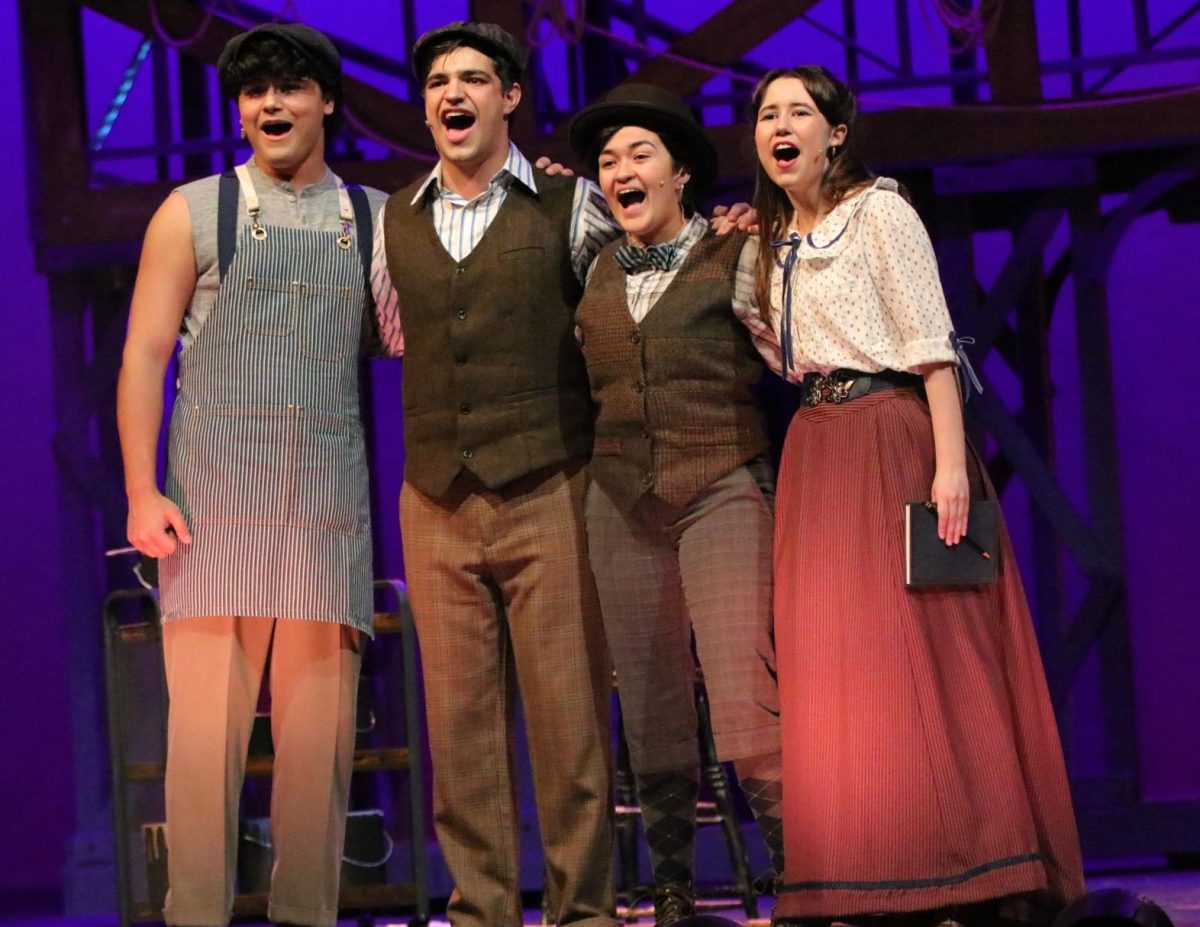
After a long day of teaching about the Gilded Age, U.S. History teacher Shane Waddell wanted to end off by showing his students an educational but entertaining film to reinforce what they had learned. While scrolling through Disney+, he finally settled on “Newsies;” a musical that reflects major historical themes such as labor movements and the struggle between workers and big business.
“Newsies” is based on the Newsboys Strike of 1899 in New York City. In the 1890’s, newspaper sellers known as “newsies,” had to purchase newspapers upfront from publishing companies and earn a profit by reselling them. Most publishers charged the newsies 50 cents for 100 papers, meaning the children only made money if they sold almost all of them.
“There were no government regulations to say that these kids only had to work eight hours or get paid the same as an adult,” Waddell said. “This was all about profits for big business. These kids are selling our newspapers, but you know, we’re gonna pay them the least amount that we can so we can have more in our pockets.”
During the Spanish American War, newspaper sales heavily rose as immigration increased and the public wanted to stay informed. Two of the largest publishers at the time, Joseph Pulitzer of New York World and William Randolph Hearst of New York Journal decided to take advantage of the demand and raised prices for the newsies.
“A lot of people coming from another country might not be able to read in English yet,” Waddell said. “But what you could do is have someone expose corruption by drawing political cartoons. Now these people who are supposed to be supporting the people in power are looking at these cartoons even if they can’t read and go ‘maybe we don’t want to support this corruption.’”
At first the newsies accepted the price hikes without protest. Once the war ended most publishers lowered their prices again except for Pulitzer and Hearst. The newsies decided to organize a city wide boycott against the two companies.
“Their efforts didn’t work the first time,” theatre director Cheryl Painter said. “I also think that’s really important because the play doesn’t end at the end of Act One. They go through more hardship and it’s easy to walk away at that point. But no, we’re doing something for the future, for better, for all of us.”
Senior Isaiah Barafwala, who took Waddell’s U.S. History class last year, said learning about the history behind “Newsies” changed how he viewed the musical.
“Even though it’s set in 1899, it doesn’t feel like it’s in 1899,” Barafwala said. “You can connect the story to so much that you think it’s modern times, but it’s really not. It brings light to issues that we face today. Being able to understand history and the indifferences that are happening in the world right now is so important.”
The strike continued for two weeks as the newsies joined forces with businessmen and politicians across the city. Sales at New York World and New York Journal plummeted, halting distribution for two weeks which forced the publishers to agree to buy back any unsold papers.
“You can look at any newspaper and you can see the world that we are living in and know that it is still time to stand up for what’s right,” Painter said. “To do what we believe in, to take care of family and work for the betterment of this world. Your voice matters and family can be more than the people you were born with. They can be the people that you pick up around the way, too.”
Barafwala now plays Jack Kelly, the leader of the newsies, in the upcoming theatre production. The opening night will be on Jan. 22.
“Knowing the history helped create a sense of truth to it,” Barafwala said. “The past musicals that I’ve done are in a mystical magical land where it’s not really realistic, but these are real events that happened. It definitely helps that there’s truth behind what’s happening on stage.”