

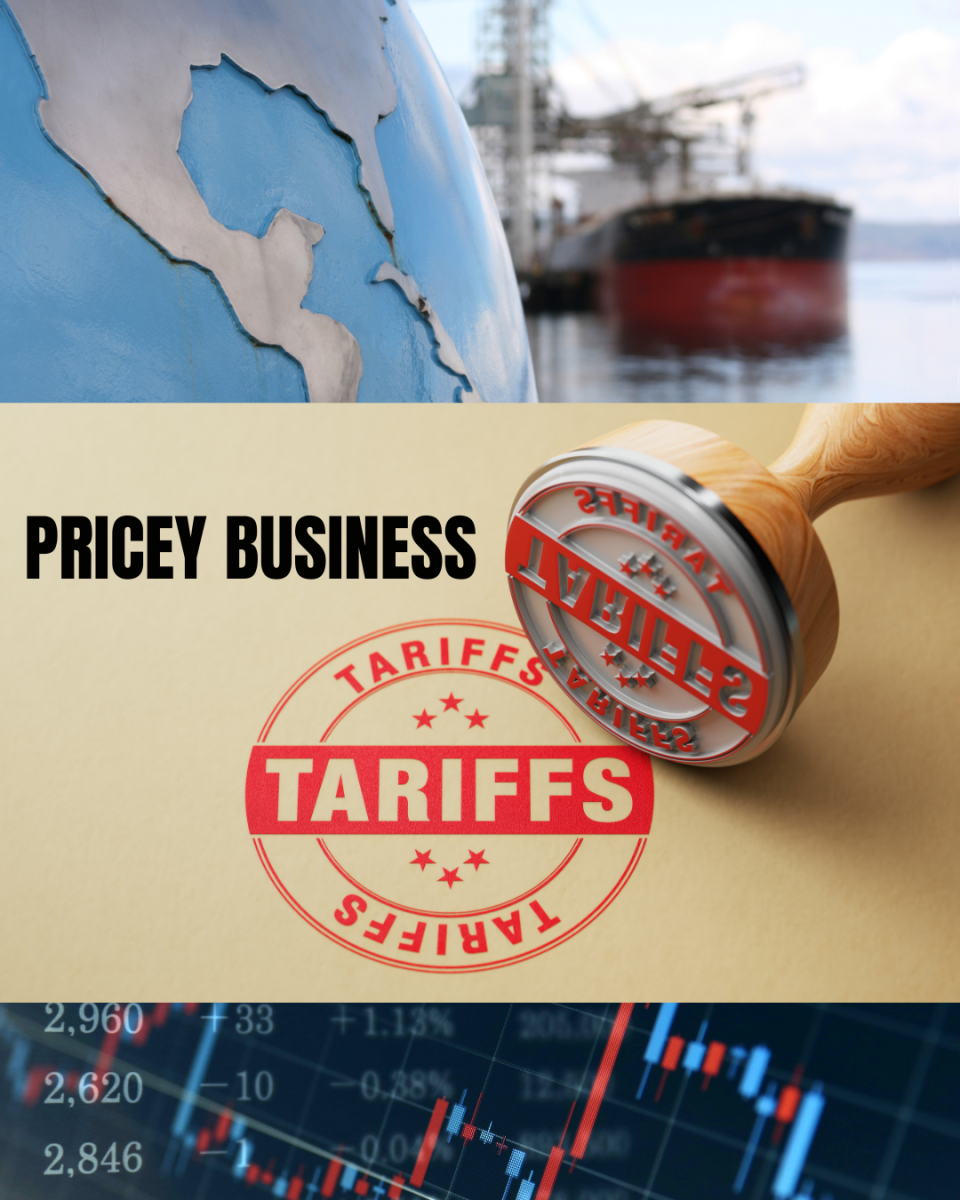
Nearly half of all Americans say rising food costs due to tariffs are causing “major” stress in their lives, with only 14% saying grocery prices are not a financial concern to them.
“This makes it way harder for vulnerable communities to afford basic stuff,” senior Om Shindhe said. “They end up having to choose between essentials, like do I buy groceries or pay bills, which is honestly messed up.”
Each month, the Bureau of Labor Statistics updates the Consumer Price Index or CPI, a metric that tracks price changes for common goods and services in the United States. In August 2025, the CPI rose 0.4% from the previous month and 2.9% since the past year. Food prices rose 0.6% from July to August, marking the fastest monthly increase since October 2022.
“It’s a huge issue because tariffs raise the cost of imported goods, and that ends up pushing prices up for consumers,” Shindhe said. “Businesses then have to pay more to bring stuff in, so they charge more to make up for it. It’s a chain reaction that makes everything more expensive.”
Pandemic Disruption
Prior to 2020, the CPI rose at a rate of around 2% annually. However in 2021, this changed due to an increased demand for goods along with supply chain and manufacturing disruptions, leading to a peak inflation rate of 9% in June 2022.
At this time, the federal government was issuing stimulus checks to help Americans who had lost their jobs due to pandemic shutdowns. While these checks gave consumers more financial freedom, there weren’t enough goods being produced to keep up with new spending habits. As more businesses started to reopen, increased demand and wages pushed prices to new highs.
Tariffs and Trade Policies
Since the start of Trump’s second term, he has placed tariffs on dozens of goods, including
a 50% tariff on steel and aluminium imports (except for those from the United Kingdom), a 50% tariff on copper and a 25% tariff on a majority of foreign cars and other car parts. In response to China’s plan to restrict the export of rare earth minerals, Trump has proposed implementing a 100% tariff on all Chinese goods beginning Nov. 1.
According to Trump, his goal with these tariffs is to reduce the U.S. trade deficit by encouraging the purchase of American made goods over foreign made products.
What this means for you
At first, most companies absorbed the extra costs, with only 13% passing them onto customers according to a KPMG Tariff Pulse Survey of 300 U.S. business executives with companies exceeding an annual revenue of $1 billion. Now, 66% of companies say they have already passed through up to half of their tariff costs to customers.
These hikes aren’t expected to decrease soon, with 42% of executives predicting an increase of up to 5% and another 29% expecting hikes between 6 to 15%. Many consumers have already begun to feel this increase with the price of tomatoes rising 3.3% between June and July and coffee rising 2.3%.
The U.S. Department of Agriculture’s Food Price Outlook for 2025 and 2026 reports prices for certain goods to rise faster than usual. Eggs are projected to increase the most at 24.8%, beef and veal up 11.6%, sugar and sweets up 4.9% and non alcoholic beverages up 3.7%. These projections are a significant concern for American families already struggling with the rising cost of living. As more companies pass tariff costs onto consumers, these increases could extend beyond groceries, leaving more households to make tough decisions about what to buy or what to go without.